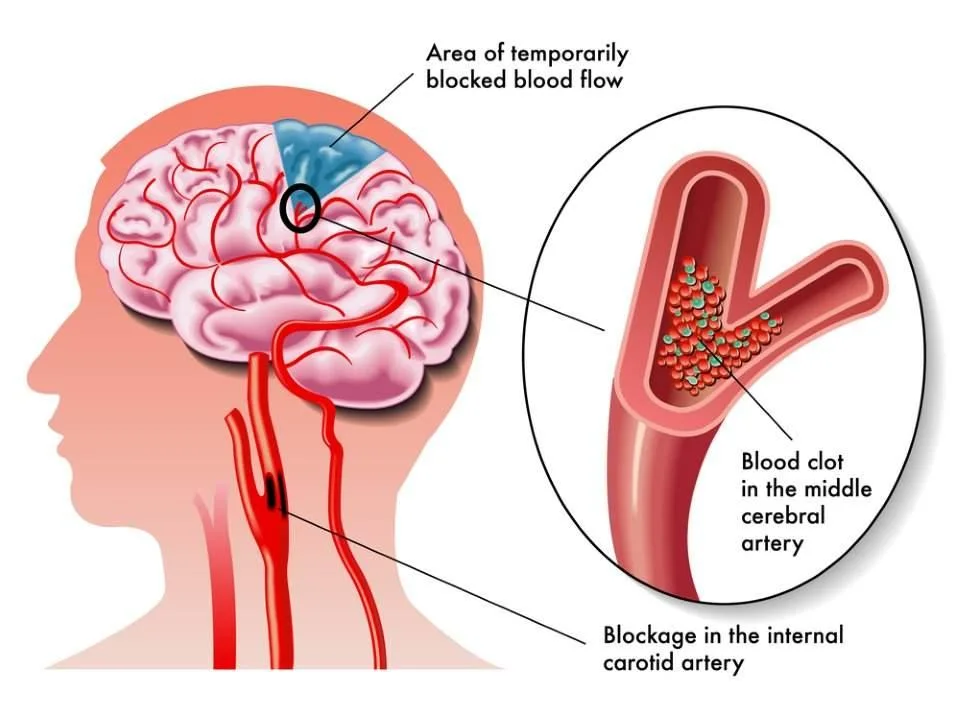


What is an aneurysm?
A brain aneurysm is a weak spot in the wall of an artery in the brain that bulges outward, like a small balloon. Most form where arteries branch at the base of the brain.
Suspected stroke? Call 108 now. Don’t wait for an appointment.
Call 108
Stroke & Neurointervention
Assessment, monitoring and endovascular treatment of brain aneurysms. Treatment choice is individual: not every aneurysm needs treatment.
A brain aneurysm is a weak spot in the wall of an artery in the brain that bulges outward, like a small balloon. Most form where arteries branch at the base of the brain.
Many aneurysms cause no symptoms and are found by chance on a scan done for another reason. Occasionally a larger aneurysm presses on nearby nerves, causing symptoms such as double vision or a drooping eyelid.
Many unruptured aneurysms are monitored with periodic imaging rather than treated straight away.
When an aneurysm bursts, it bleeds into the space around the brain (subarachnoid haemorrhage). This is a medical emergency.
Symptoms include a sudden, severe headache, vomiting, neck stiffness, sensitivity to light, confusion, seizures or loss of consciousness. Immediate emergency care is needed, followed by treatment to secure the aneurysm and prevent re-bleeding.
 Clip · 46s
How the catheter reaches the brain’s arteries and how the X-ray pictures are taken.
The decision weighs the risk of rupture against the risk of treatment. Factors include:
Where treatment is advised, options include:
Soft platinum coils placed inside the aneurysm through a microcatheter.
A fine mesh stent across the aneurysm neck that redirects blood flow.
Such as stent- or balloon-assisted coiling, or surgical clipping by a neurosurgeon, depending on the aneurysm.
Treatment choice is individualised and discussed with each patient.
 Clip · 66s
How coils are placed inside an aneurysm through the blood vessels to seal it off.
Both monitored and treated aneurysms need follow-up: imaging surveillance (MRA, CTA or DSA) at intervals, and clinical review including blood pressure control and stopping smoking.
 Clip · 20s
What flow diversion is, what to expect from the procedure, recovery and possible complications.
Open Mon–Sat, 9AM–5PM
Consultations are at KIMS Hospitals (New Facility), Kondapur, Hyderabad. Bring your CT, MRI or angiography reports and images. A sudden, severe headache is an emergency: call 108 or go to the nearest emergency department.
Choose a day from Monday to Saturday. The clinic calls back to confirm your time.
Request appointment