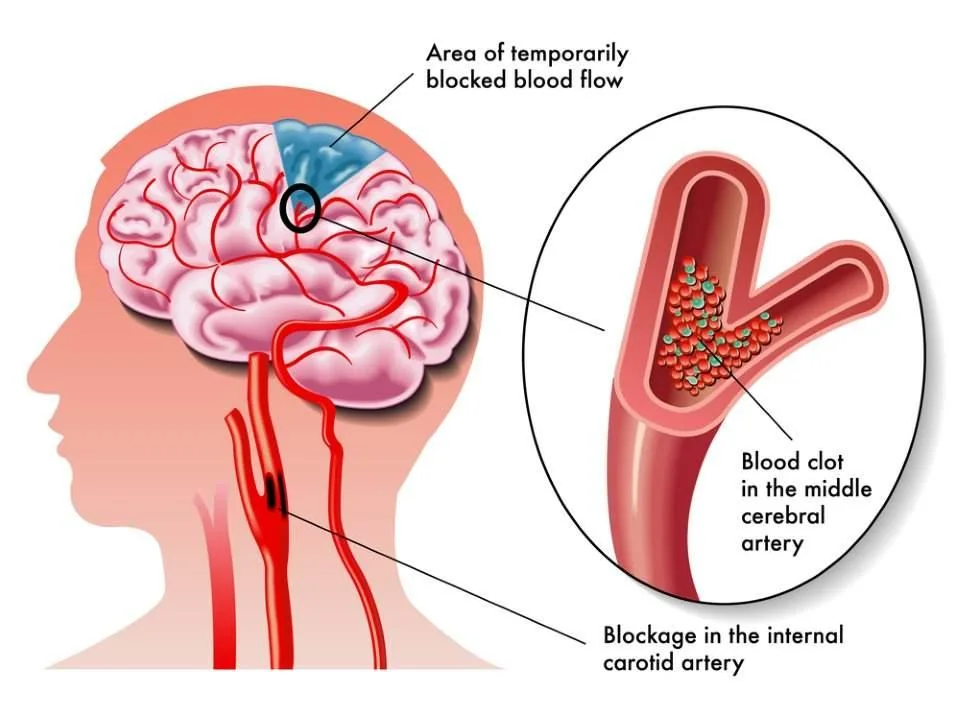

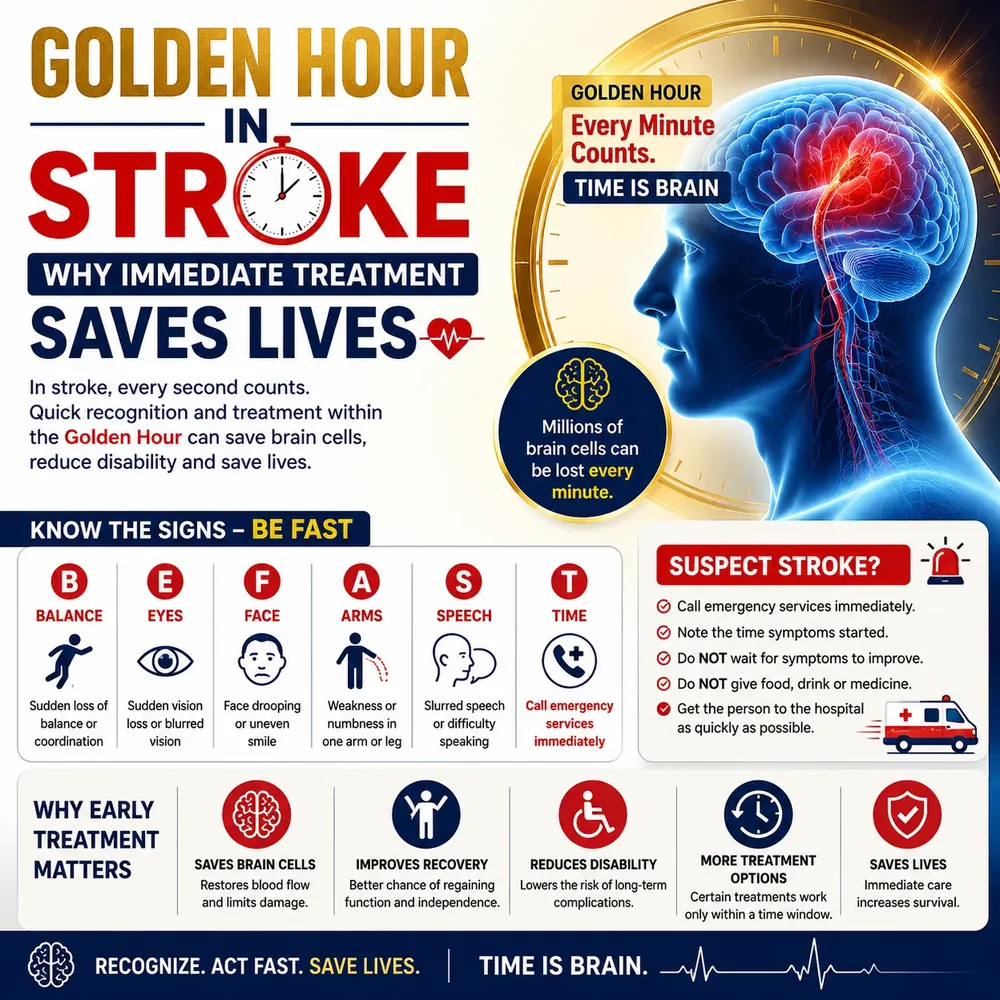
When a brain artery is blocked by a blood clot, an ischaemic stroke begins. Brain cells downstream are instantly deprived of oxygen and vital nutrients. In neurology, the phrase "Time is Brain" is not a slogan—it reflects biological reality: an estimated 1.9 million neurons perish every passing minute untreated.
Recognizing BE-FAST: The Emergency Warning Signs
Stroke symptoms strike suddenly. Recognizing them immediately and acting without delay is the difference between complete recovery and permanent disability:
- B (Balance): Sudden loss of balance, unsteadiness, or severe dizziness.
- E (Eyes): Sudden loss of vision in one or both eyes, or double vision.
- F (Face): One side of the face droops or feels numb when smiling.
- A (Arms): One arm drifts downward or feels weak when both arms are raised.
- S (Speech): Slurred speech, inability to find words, or difficulty comprehending simple sentences.
- T (Time): Call an emergency ambulance immediately. Note the exact time symptoms were last known normal.
What is the "Golden Hour" in Acute Stroke?
The first 60 minutes after reaching the emergency room are termed the golden hour. During this window, an urgent non-contrast CT brain scan and CT angiography determine whether the patient qualifies for IV thrombolysis (clot-dissolving medication administered within 4.5 hours of symptom onset).
For large vessel occlusions (severe blockages in major brain arteries), medical science now offers mechanical thrombectomy—a minimally invasive neurointerventional procedure performed in the cath lab where a microcatheter and stent retriever directly extract the clot up to 24 hours from symptom onset in selected patients.
What You Should Do When You Suspect a Stroke
- Do not give water, food, or aspirin before a hospital CT scan confirms the stroke is not a bleed.
- Call an emergency ambulance or take the patient straight to a comprehensive stroke-ready hospital.
- Keep the patient lying flat on their side if they are drowsy or vomiting.