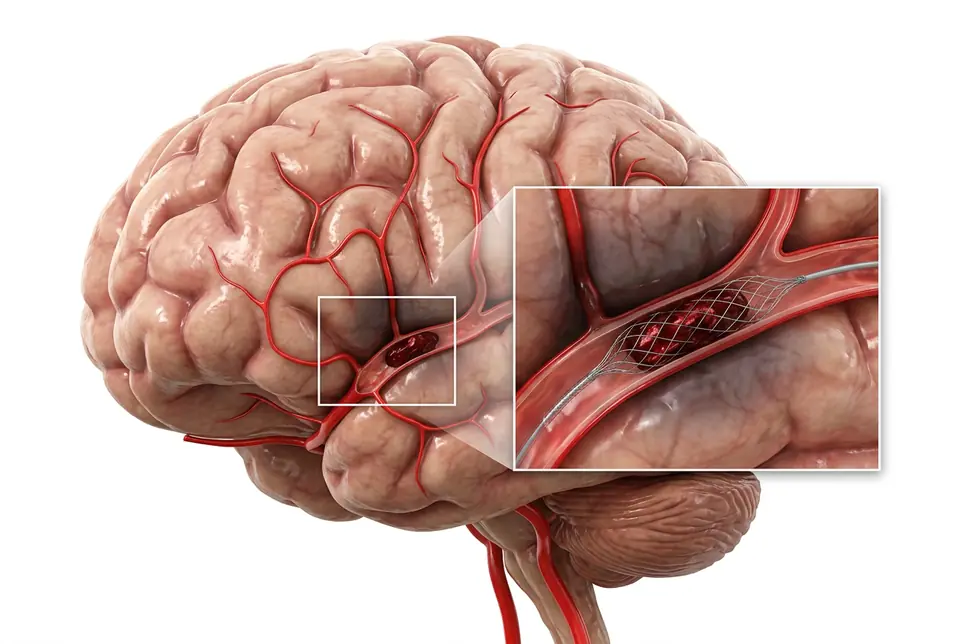


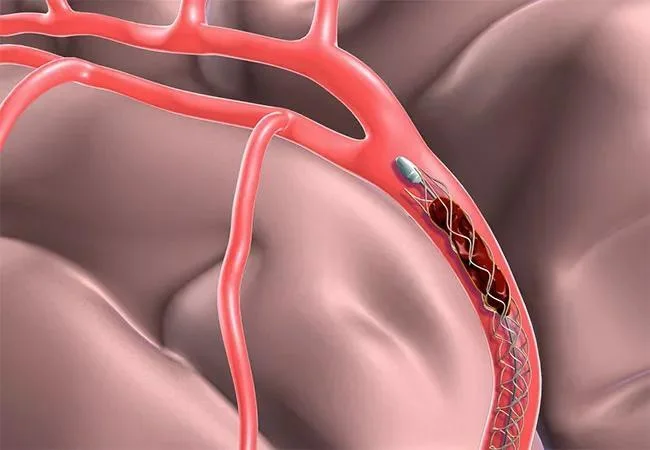
Mechanical thrombectomy is a procedure that removes a blood clot from a large artery in the brain. It is done from inside the blood vessels, through a thin tube (catheter) passed up from an artery in the groin or wrist, so the skull is not opened. It is used for selected patients with an acute ischaemic stroke, the type of stroke caused by a blocked artery.
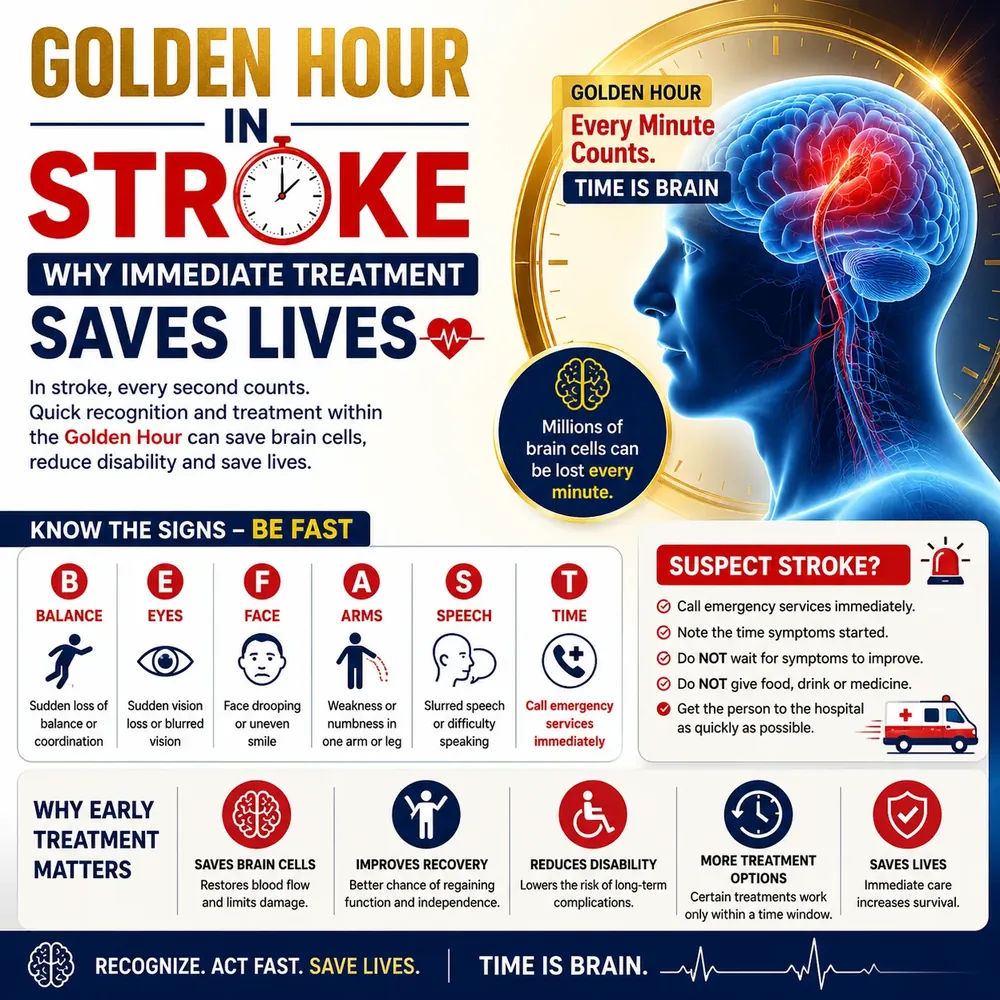
If you think someone is having a stroke, call 108 or go to the nearest emergency department now. Thrombectomy is an emergency hospital treatment; it is never arranged through an outpatient appointment.
What problem does it treat?
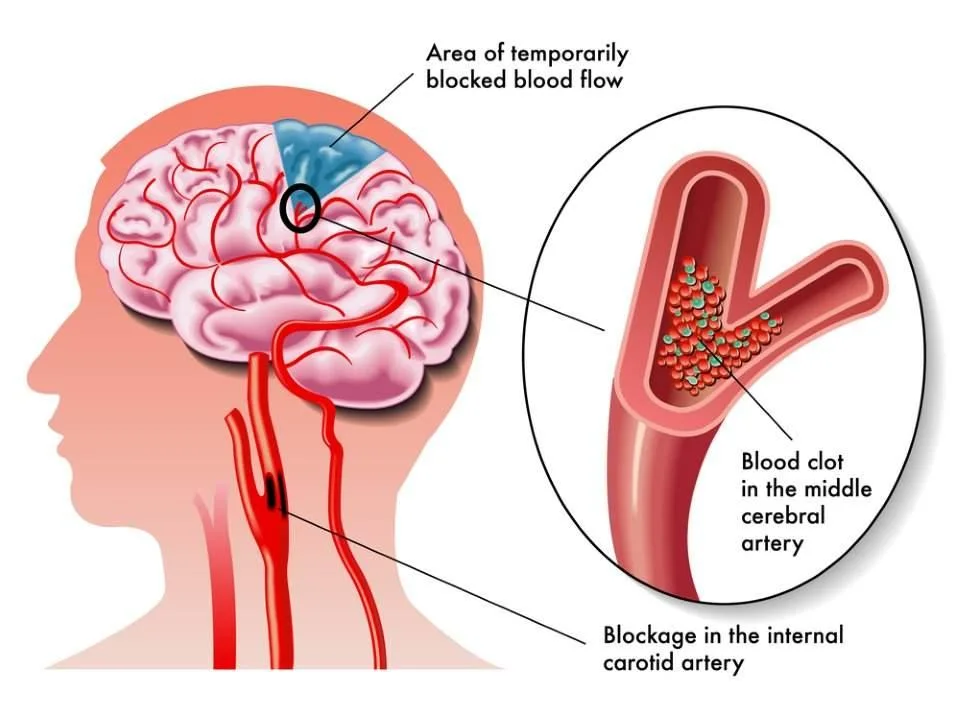
Most strokes are ischaemic: a clot blocks an artery and part of the brain stops receiving blood. When the clot sits in one of the brain’s large arteries, it is called a large vessel occlusion. These strokes affect a large area of the brain and often cause severe weakness, speech or vision problems.
Clot-dissolving medicine (thrombolysis) is given through a vein and helps many patients, but it often does not clear a clot in a large artery on its own. Thrombectomy was developed for this situation.
How is it done?
- The procedure is done in a catheter laboratory with X-ray imaging.
- A catheter is passed from the groin or wrist artery up to the blocked brain artery.
- A device such as a stent retriever (a small mesh tube that grips the clot) or an aspiration catheter (which suctions the clot) is used to remove it.
- Angiography pictures are taken during and after the procedure to see whether blood flow has returned.
Some patients also receive clot-dissolving medicine before the procedure. The two treatments are not alternatives; the team decides what is suitable for each patient.
Who may be suitable?
Thrombectomy helps only some stroke patients. The decision is made in hospital after a clinical assessment and brain and blood-vessel imaging (CT or MRI with angiography). The team looks at:
- whether a large artery is blocked
- how much brain tissue is still salvageable on the scans
- how long ago the symptoms began, or when the person was last seen well
- the severity of the stroke and the patient’s overall health
Treatment works best when it starts early. Some selected patients may still be treated many hours after symptoms began, or after waking up with symptoms, but only when the scans show it may help.
What are the risks?
Like any procedure, thrombectomy has risks. They include bleeding in the brain, injury to a blood vessel, problems at the puncture site in the groin or wrist, reactions to the X-ray contrast dye, and the clot moving to another artery. Blood flow cannot always be fully restored.
Restoring blood flow does not guarantee complete recovery. The outcome depends on the size and location of the stroke, how quickly treatment started and the patient’s overall condition.
What happens afterwards?
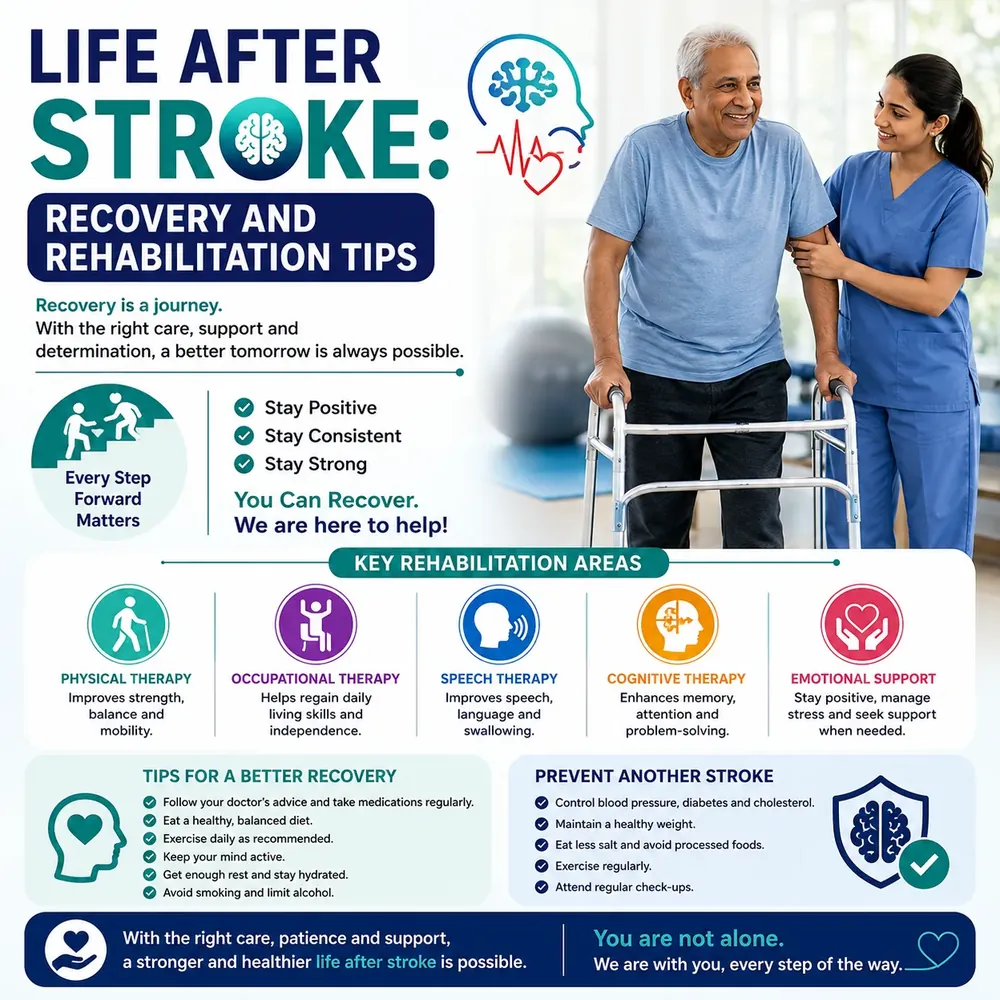
Patients are monitored closely, usually in a stroke unit or intensive care. Tests look for the cause of the clot, such as an irregular heart rhythm or narrowed arteries, and prevention starts with medicines and control of blood pressure, diabetes and cholesterol. Many patients also need rehabilitation with physiotherapy, speech therapy or occupational therapy.
Related pages
References
This article is general information, not a diagnosis. For a suspected stroke or other emergency, call 108 or go to the nearest emergency department.