

No. Many brain aneurysms are found by chance on a scan done for another reason, such as headaches or a head injury. A large number of these unruptured aneurysms are small and have a low risk of bleeding. Some are best treated, while others can be safely watched with regular scans.
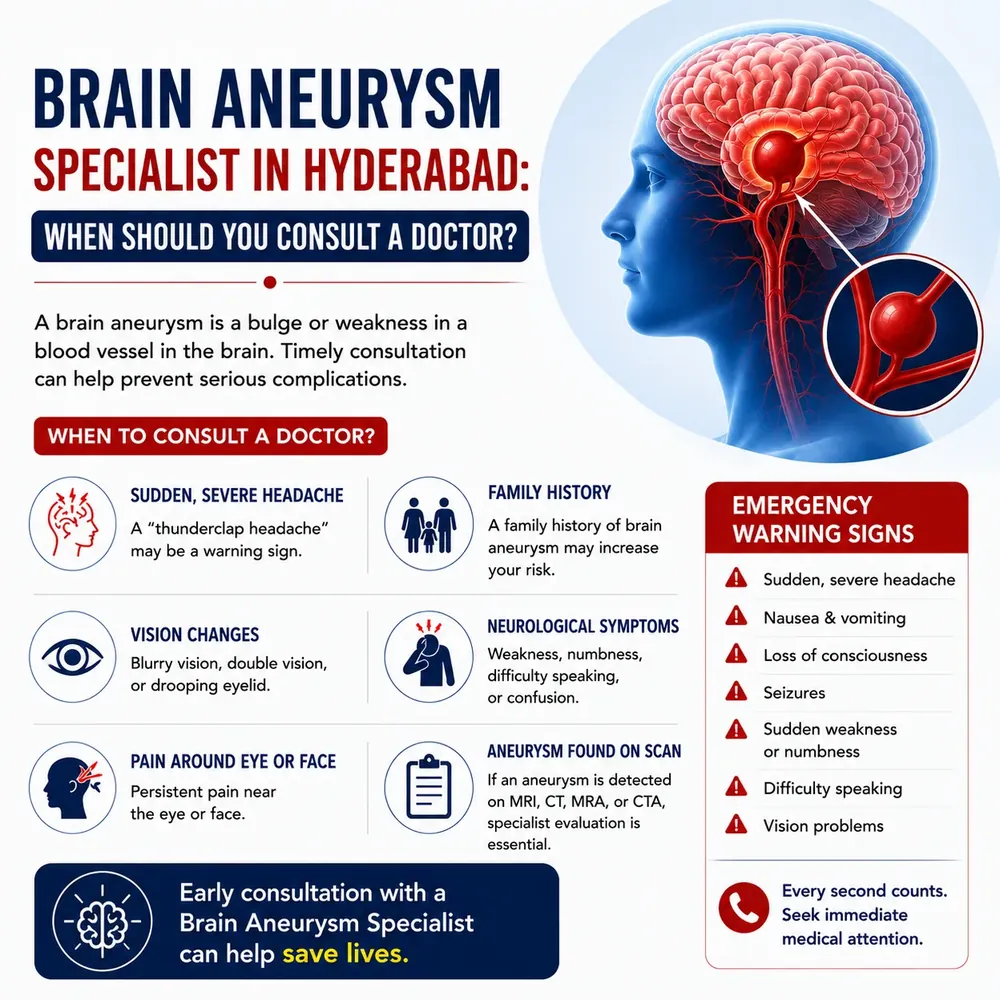
A ruptured aneurysm is different: it causes bleeding around the brain (subarachnoid haemorrhage) and is an emergency. A sudden, severe headache, often described as the worst headache ever, with or without vomiting, neck stiffness, confusion or collapse, needs 108 or the nearest emergency department immediately.
What decides whether to treat?
The decision balances the risk of the aneurysm bleeding against the risk of treating it. The specialist looks at:
- Size: larger aneurysms generally carry a higher risk.
- Location: some arteries carry a higher risk than others.
- Shape: an irregular shape or a small “daughter” bulge can suggest higher risk.
- Growth: an aneurysm that gets bigger on follow-up scans is usually considered for treatment.
- Symptoms: an aneurysm pressing on a nerve, for example causing double vision or a drooping eyelid, needs prompt assessment.
- Personal factors: age, general health, previous bleeding from another aneurysm, family history, smoking and blood pressure.
What does monitoring involve?
If treatment is not advised, the aneurysm is usually checked with repeat imaging, such as an MRA or CTA scan, at intervals the specialist recommends. Monitoring is also a time to lower risk:
- stop smoking
- keep blood pressure well controlled
- avoid recreational drugs such as cocaine and amphetamines
- keep follow-up appointments, even if you feel well
If treatment is advised
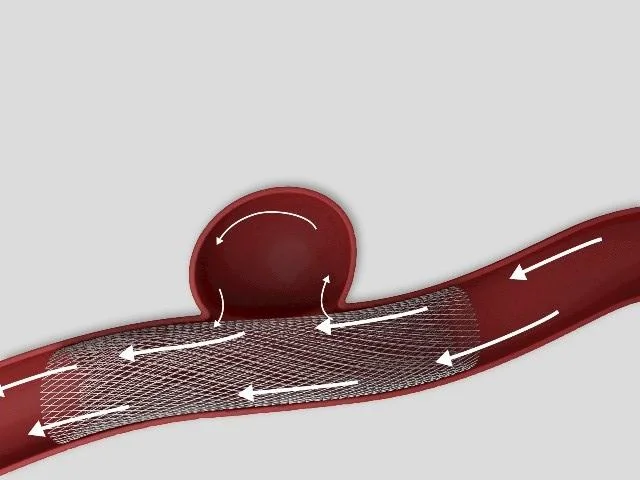
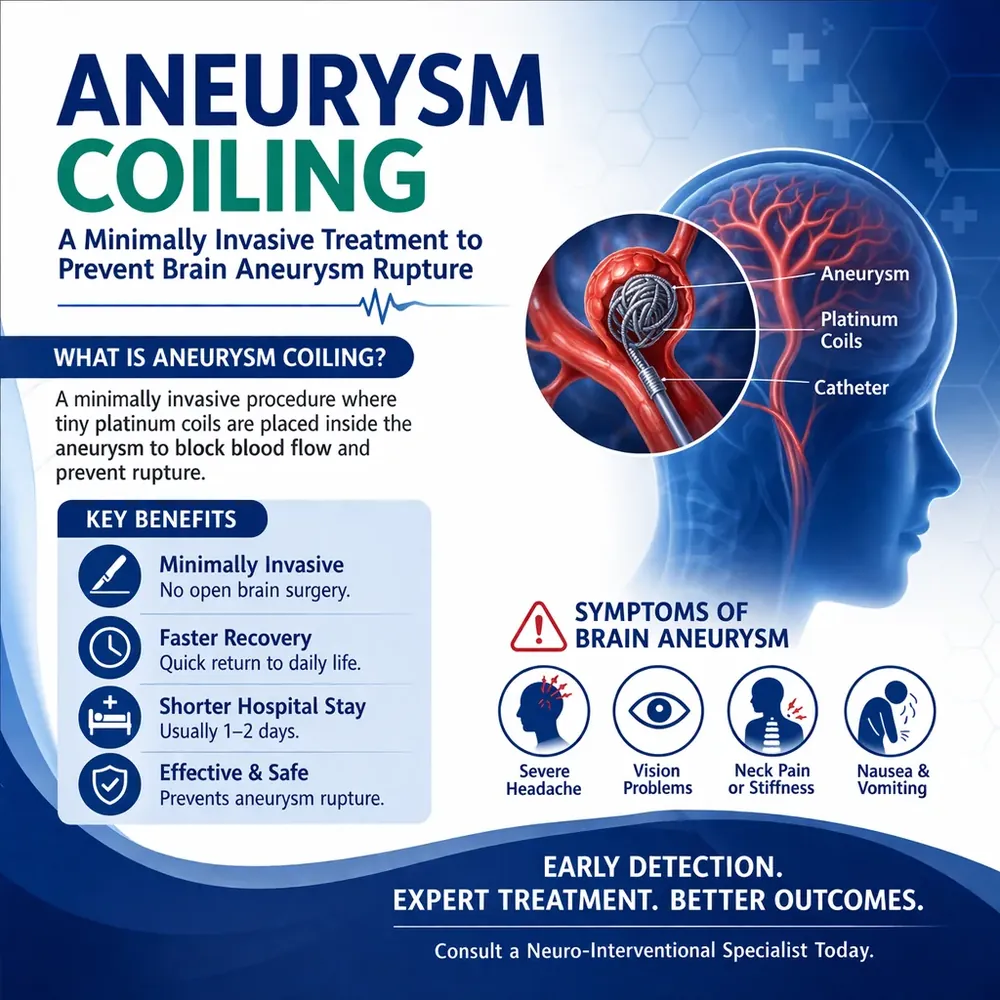
Options include endovascular coiling, where soft coils fill the aneurysm from inside the artery; flow diversion, where a fine mesh stent redirects blood flow away from the aneurysm; and surgical clipping by a neurosurgeon. Each suits different aneurysms, and the choice is made individually after detailed imaging, often including cerebral angiography (DSA).
Questions to ask your specialist
- How large is the aneurysm, and where is it?
- What is my estimated risk if we watch it, and if we treat it?
- How often will I need scans?
- Which signs should make me seek emergency care?
Related pages
References
This article is general information, not a diagnosis. For a suspected stroke or other emergency, call 108 or go to the nearest emergency department.