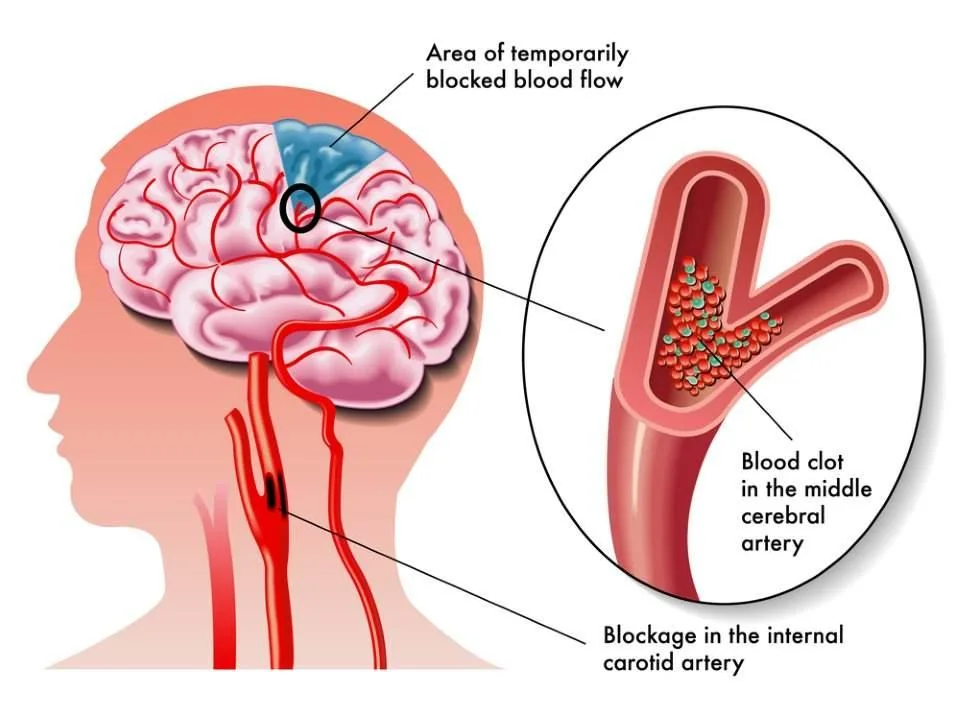

A stroke happens when blood flow to part of the brain is blocked by a clot or interrupted by bleeding. Brain cells start to be damaged within minutes, and some treatments only work if they are given early. Recognising the signs and getting to hospital quickly is the most useful thing a family member can do.
Remember BE FAST
- B – Balance: sudden loss of balance, dizziness or difficulty walking
- E – Eyes: sudden loss of vision in one or both eyes, or double vision
- F – Face: one side of the face droops, or the smile looks uneven
- A – Arms: weakness or numbness in one arm or leg; one arm drifts down when both are raised
- S – Speech: slurred speech, difficulty finding words or understanding others
- T – Time: call 108 or go straight to the nearest hospital with an emergency department
Other sudden symptoms can also be a stroke: confusion, a sudden very severe headache unlike any before, or numbness on one side of the body. The key word is sudden.
When the symptoms go away
Sometimes the symptoms last only a few minutes and then disappear. This may be a transient ischaemic attack (TIA), often called a “mini-stroke”. A TIA is a warning that a full stroke may follow, sometimes within days. It still needs same-day medical assessment, even if the person feels well again.
What to do while waiting for help
- Note the time the symptoms started, or the last time the person was seen well. Doctors use this to decide which treatments are possible.
- Do not wait to see if the symptoms improve, and do not book a routine clinic appointment.
- Do not give food, drink or tablets (including aspirin) until a doctor has assessed the person: swallowing may be affected, and some strokes are caused by bleeding.
- Keep the person comfortable, lying on their side if they are drowsy or vomiting.
- Take a list of their current medicines to the hospital if you can.
What happens at hospital
The emergency team examines the person and arranges a brain scan to see whether the stroke is caused by a clot or by bleeding. For a clot, treatment may include clot-dissolving medicine and, for selected patients with a blocked large artery, mechanical thrombectomy to remove the clot. Not every stroke is suitable for these treatments; the decision depends on the scans, the timing and the person’s overall health.
Related pages
References
This article is general information, not a diagnosis. For a suspected stroke or other emergency, call 108 or go to the nearest emergency department.