
A stroke happens when part of the brain suddenly loses its blood supply. Brain cells start to die within minutes, so the treatments that can limit the damage only work if they are given early. Knowing the signs, and what to expect on arrival at hospital, helps families act quickly.
Types of stroke
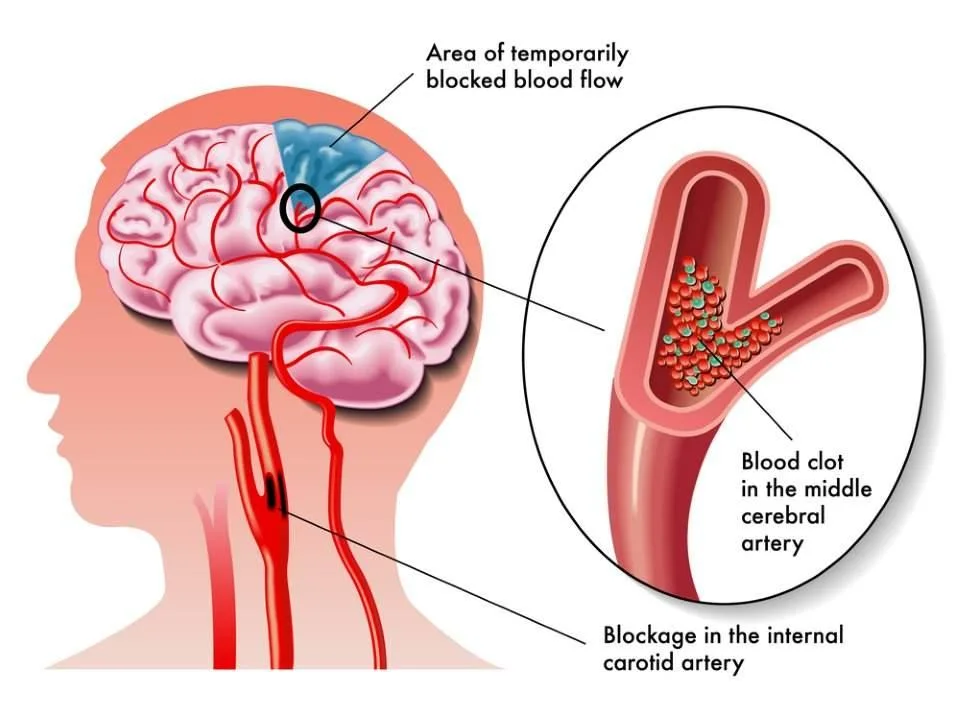
- Ischaemic stroke: an artery to the brain is blocked by a clot. This is the most common type.
- Haemorrhagic stroke: a blood vessel bursts and bleeds into or around the brain.
- Transient ischaemic attack (TIA): stroke symptoms that go away, usually within minutes. It is a warning that a stroke may follow and needs urgent assessment.
Warning signs
- Sudden weakness or numbness of the face, arm or leg, usually on one side
- Slurred speech, or trouble finding or understanding words
- Sudden loss of vision in one or both eyes
- Sudden loss of balance or difficulty walking
- A sudden, severe headache unlike any before
If you notice any of these, call 108 or go to the nearest emergency department straight away. Note the time the symptoms started, or the last time the person was seen well. Doctors will ask, because it guides treatment.
What happens on arrival
The emergency team checks breathing, blood pressure and blood sugar, and a brain scan (CT or MRI) is done quickly. The scan shows whether the stroke is from a blockage or a bleed, and that difference decides the treatment. A scan of the blood vessels (CT or MR angiography) is often done at the same time to find a blocked artery.
Treatment for a blocked artery
- Clot-dissolving medicine (thrombolysis): given through a drip to suitable patients within the first few hours.
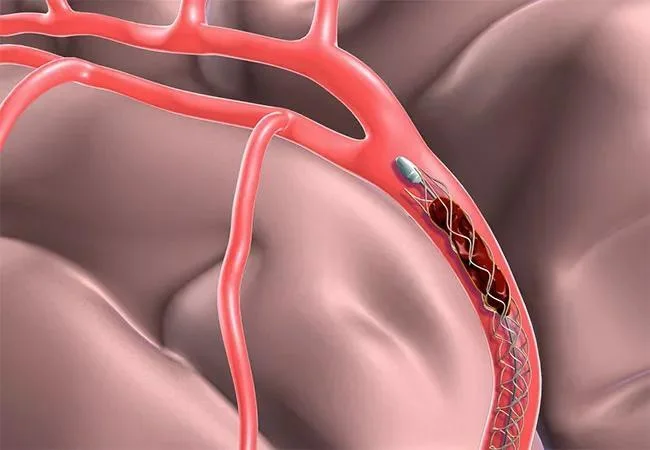
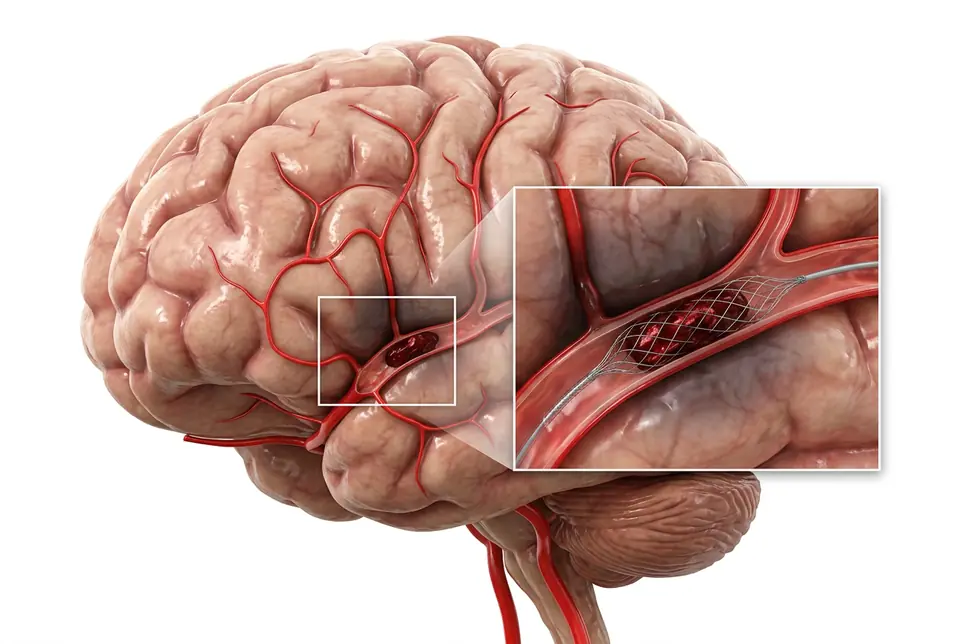
- Mechanical thrombectomy: for a clot in one of the large brain arteries, a thin tube is passed up from the groin or wrist and the clot is pulled out. Some selected patients can still be treated later in the day if their scans show brain tissue that can be saved.
Not every stroke can be treated with these. Some patients arrive too late, some have a clot in a small artery, and some have other medical reasons that make the treatment unsafe. The decision is made for each patient from the scans and the time since symptoms began.
After the first day
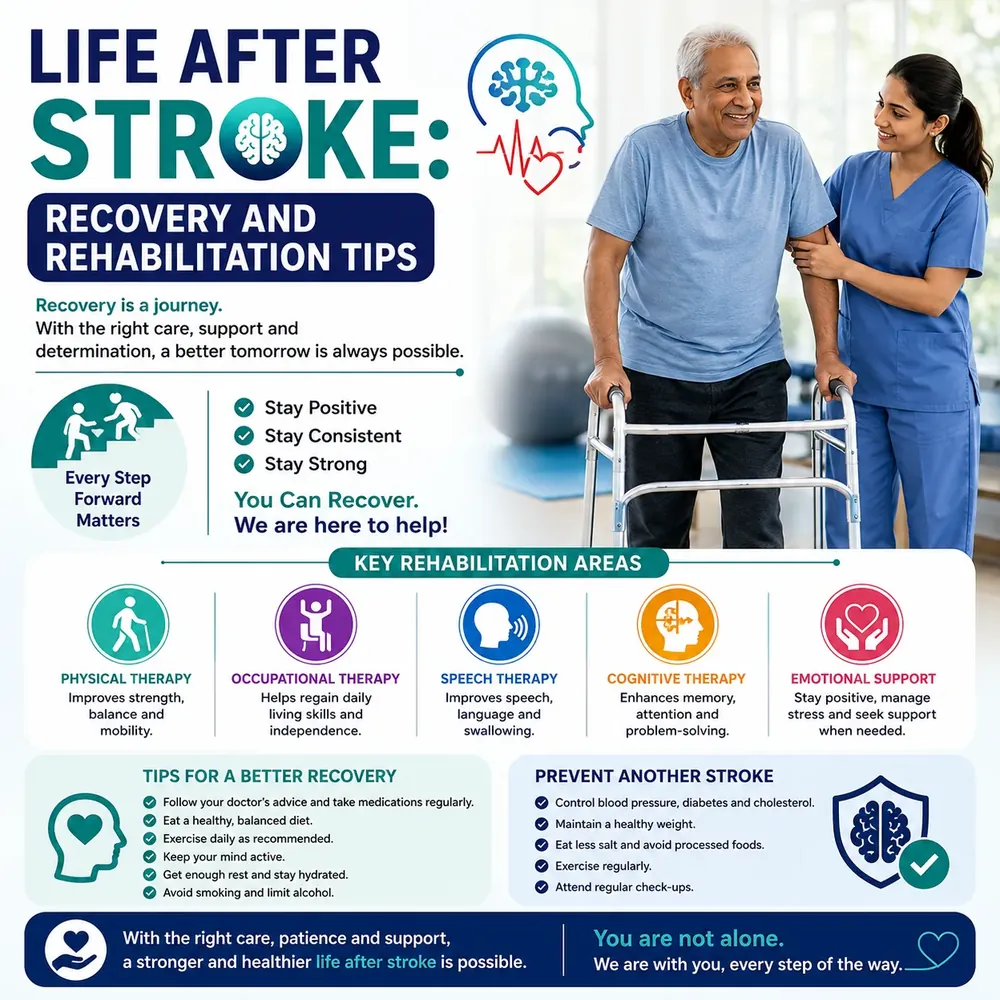
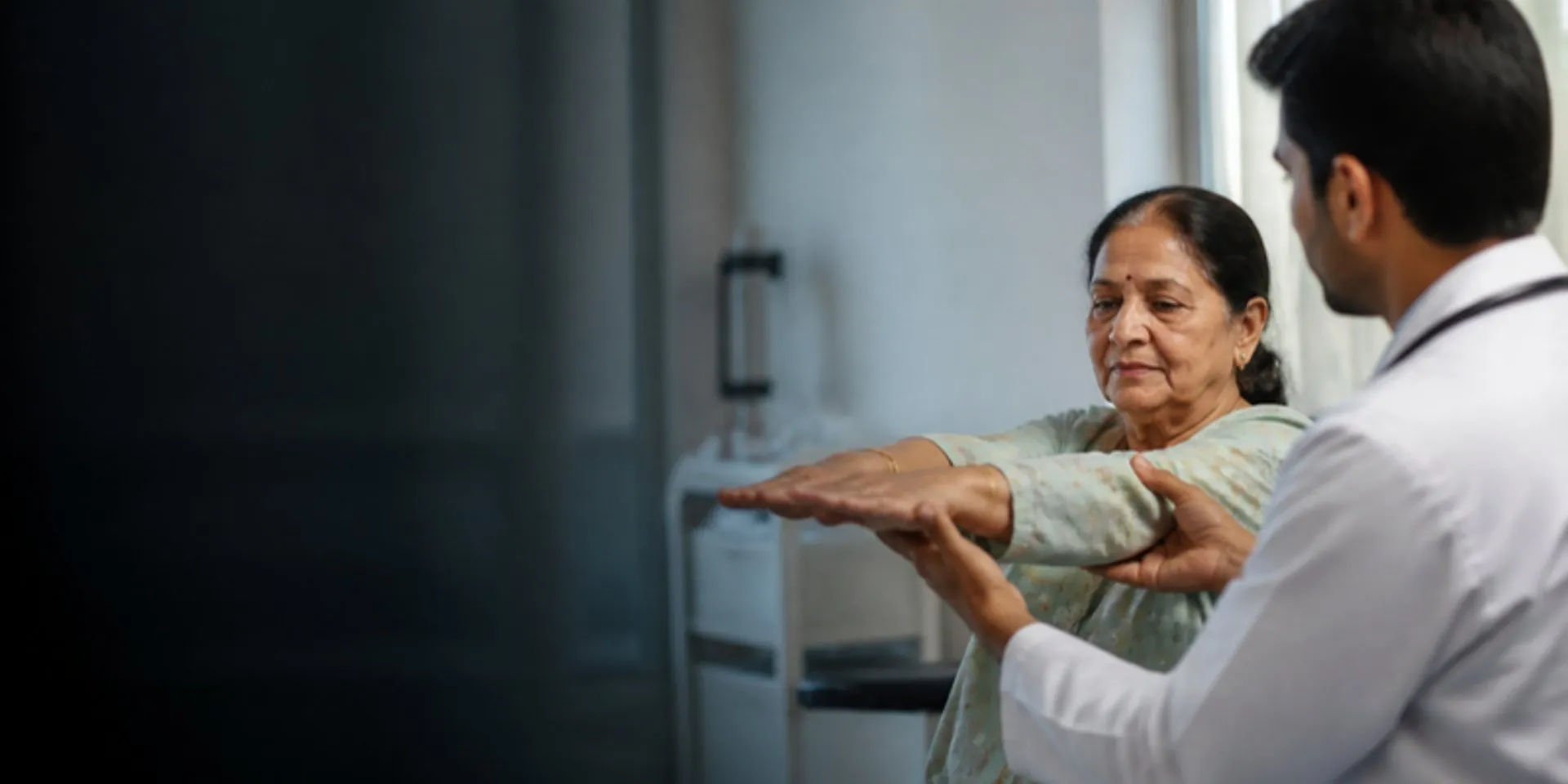
Patients are watched closely for changes. Tests look for the cause, such as narrowing of the carotid arteries or an irregular heart rhythm. Medicines to prevent another stroke are started, and physiotherapy, speech therapy and swallowing assessment begin as soon as it is safe.
Lowering the risk of another stroke
- Keep blood pressure under control and check it regularly
- Manage diabetes and cholesterol
- Stop smoking and limit alcohol
- Take blood thinners and other medicines exactly as prescribed
- Stay active and keep a healthy weight
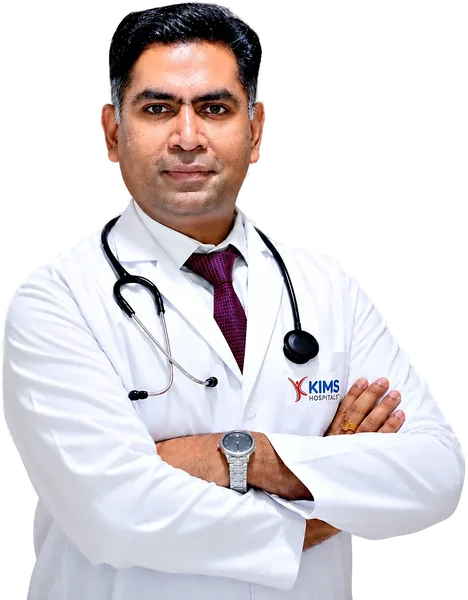
Dr. Manoj Vasireddy sees patients after a stroke or TIA at KIMS Hospitals, Kondapur, to review the cause and plan prevention. For sudden symptoms, always go to the emergency department first.
Related pages
References
This article is general information, not a diagnosis. For a suspected stroke or other emergency, call 108 or go to the nearest emergency department.