


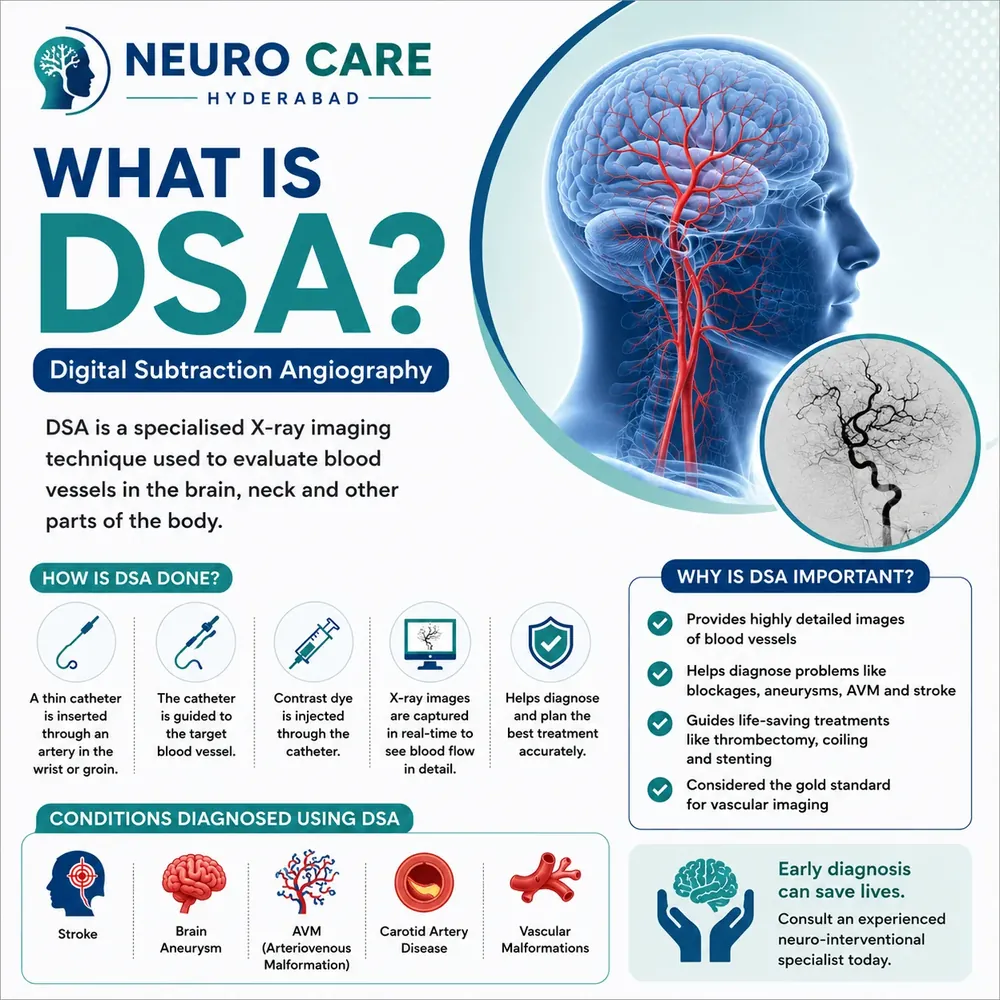
Digital Subtraction Angiography (DSA) is an advanced imaging technique used to visualize blood vessels in the brain, neck, and other parts of the body. It helps doctors diagnose and treat conditions affecting arteries and veins with exceptional precision.
DSA is considered the gold standard for evaluating vascular diseases because it provides detailed, real-time images of blood flow and blood vessel anatomy.
Why is DSA performed?
Your doctor may recommend a DSA if you have symptoms or conditions such as:
- Brain stroke
- Transient Ischemic Attack (TIA)
- Brain aneurysm
- Arteriovenous Malformation (AVM)
- Carotid artery stenosis
- Brain hemorrhage
- Vascular malformations
- Unexplained neurological symptoms
How is the procedure done?
During the procedure:
- A small catheter is inserted through an artery, usually in the wrist or groin.
- The catheter is carefully guided to the blood vessels being examined.
- A contrast dye is injected through the catheter.
- Specialized X-ray images are captured to visualize blood flow and identify any abnormalities.
A computer then digitally removes (“subtracts”) background structures such as bone from the images, leaving a clear view of the blood vessels alone. This is what gives the test its name.
The procedure is typically performed under local anesthesia and may take between 30 minutes and 2 hours depending on the complexity.
Benefits of DSA
High accuracy
DSA provides highly detailed images of blood vessels that may not be visible on routine CT or MRI scans.
Early diagnosis
It helps detect vascular abnormalities at an early stage, enabling timely treatment.
Minimally invasive
Only a small catheter insertion is required, reducing surgical risks.
Treatment planning
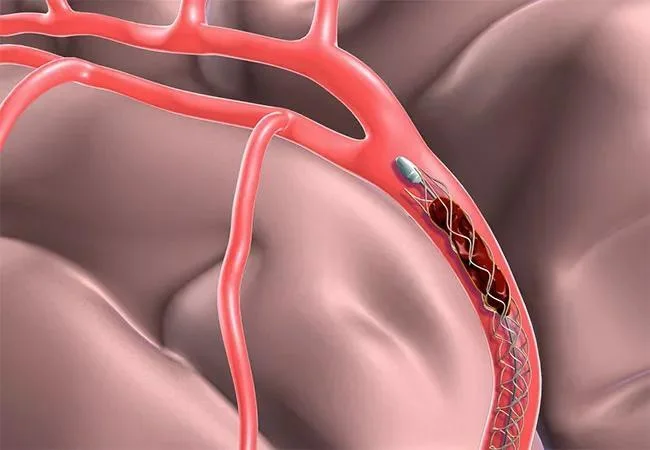
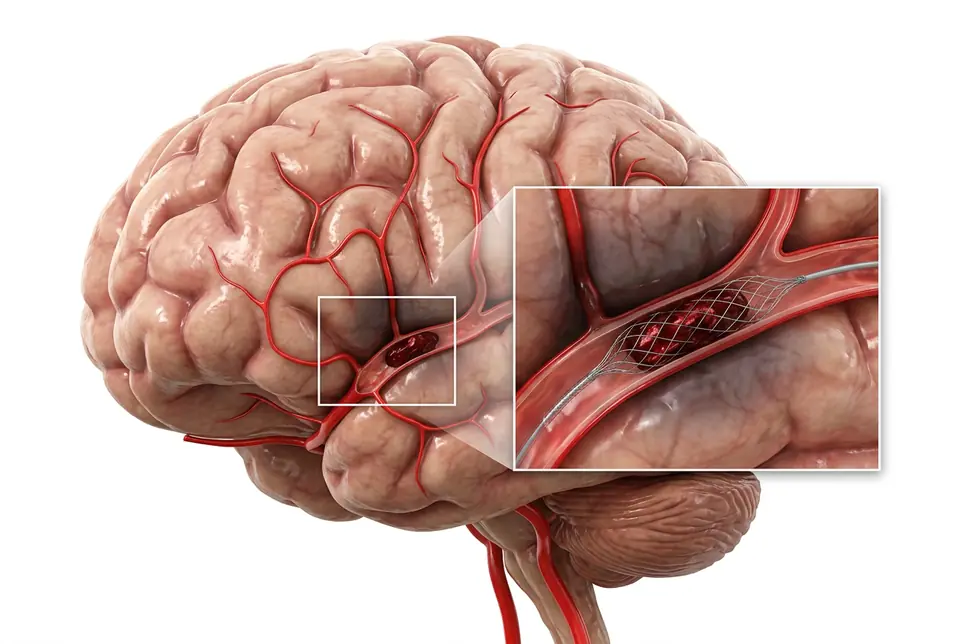
DSA helps specialists accurately plan interventions such as thrombectomy, aneurysm coiling, and stenting.
Conditions diagnosed using DSA
Brain aneurysm
A bulging blood vessel in the brain that can rupture and cause life-threatening bleeding.
Stroke
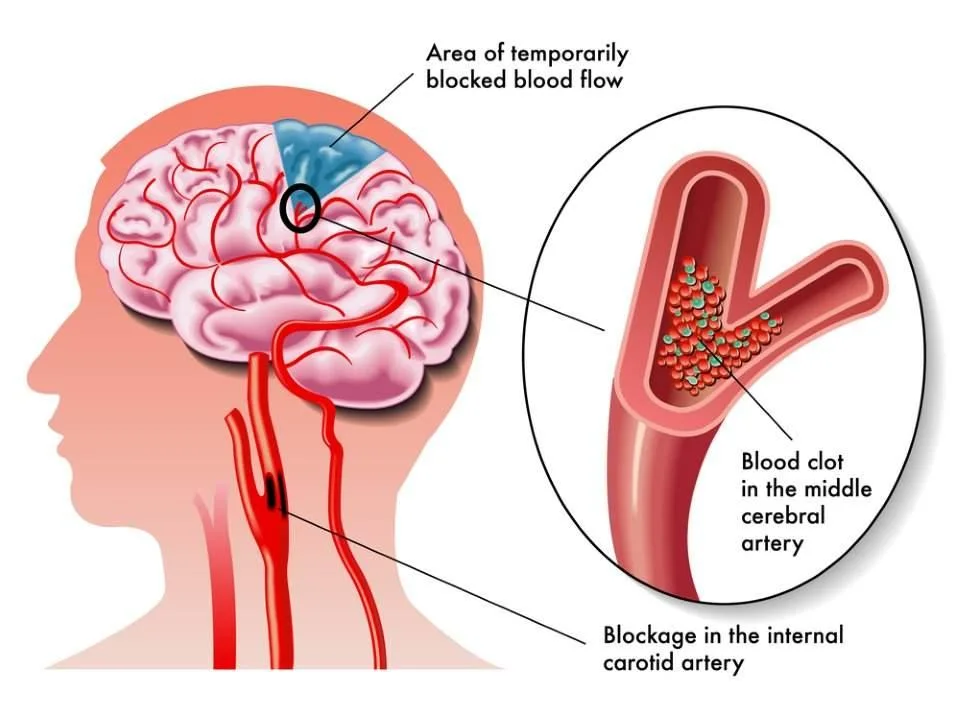
DSA helps identify blocked arteries responsible for ischemic stroke and guides emergency treatment.
AVM (arteriovenous malformation)
An abnormal connection between arteries and veins that may lead to bleeding or seizures.
Carotid artery disease
Narrowing of the carotid arteries can increase the risk of stroke and requires prompt evaluation.
Is DSA safe?
DSA is generally a safe procedure when performed by experienced neuro-interventional specialists. As with any medical procedure, there are minor risks, including:
- Bleeding at the catheter insertion site
- Allergic reaction to contrast dye
- Infection (rare)
- Temporary discomfort
Your medical team will thoroughly assess your condition before recommending the procedure.
Recovery after DSA
Most patients can return home the same day or after a short observation period. Drinking plenty of fluids and following post-procedure instructions helps ensure a smooth recovery.
When should you consult a specialist?
Seek immediate medical attention if you experience:
- Sudden weakness or paralysis
- Difficulty speaking
- Severe headache
- Vision changes
- Dizziness or loss of balance
Early diagnosis and treatment can significantly improve outcomes in vascular and stroke-related conditions.
References
This article is general information, not a diagnosis. For a suspected stroke or other emergency, call 108 or go to the nearest emergency department.