
Surviving the first days of a stroke is the beginning of a longer journey. The brain can partly rewire itself, with healthy areas taking over some functions of the damaged area. Rehabilitation helps this happen, and it works best when it starts early and continues steadily.
The rehabilitation team
- Physiotherapy: strength, balance, walking and preventing stiff joints. Sitting up and moving begin as soon as it is safe, often within the first days.
- Speech and language therapy: speaking, understanding, reading and writing, for people with aphasia or slurred speech.
- Swallowing therapy: assessing and retraining swallowing, and advising on safe food textures, to prevent choking and chest infections.
- Occupational therapy: relearning daily activities such as dressing, bathing, eating and cooking, and adapting the home.
- Cognitive therapy: memory, attention and planning.
- Psychological support: for low mood, anxiety and adjustment, for the patient and the family.
How long does recovery take?
The fastest improvement usually happens in the first three months. Recovery continues more slowly for six months to a year, and some people keep improving for longer with practice. Every stroke is different: two people with similar scans can recover very differently.
What affects the outlook
- The size and location of the stroke
- Whether it was a blockage or a bleed
- How quickly treatment started
- Age, general health, and conditions such as dementia or heart failure
- Early, regular rehabilitation and family support
Problems to watch for at home
- Depression: common after stroke and treatable. Watch for withdrawal, tearfulness, poor sleep or loss of interest.
- Fatigue: tiredness out of proportion to activity is very common in the first months.
- Shoulder pain and stiffness on the weak side: support the arm and keep it moving gently.
- Chest infections: from food or drink going down the wrong way; follow swallowing advice.
- Falls: from weakness and poor balance; remove loose rugs and add grab rails.
- Seizures: can occur weeks or months after a stroke.
- Bed sores and leg clots in people who are not yet walking.
- Bladder and bowel problems, which usually improve with time and a toileting routine.
Preventing a second stroke
The risk of another stroke is highest in the first year. Preventing it is as important as rehabilitation:
- Take antiplatelet or anticoagulant medicines exactly as prescribed, and do not stop them without asking your doctor.
- Keep blood pressure, blood sugar and cholesterol at the targets your doctor sets.
- Stop smoking and avoid alcohol.
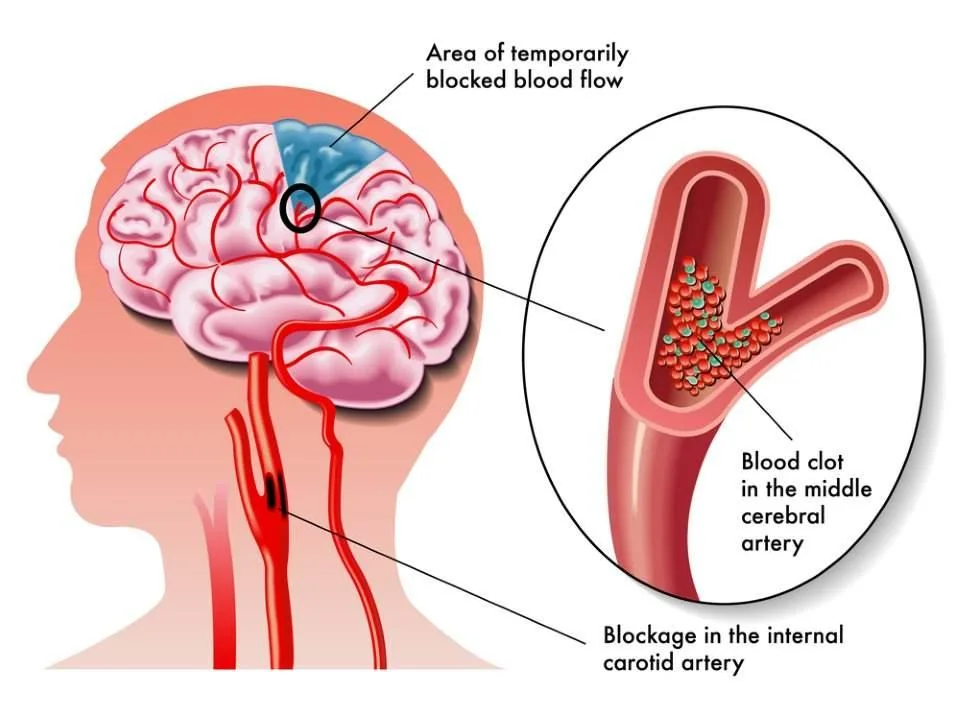
- Treat any narrowing of the neck arteries and heart rhythm problems that were found.
- Keep follow-up appointments and repeat tests when advised.
When to seek urgent help
Any new weakness, speech difficulty, vision loss or severe headache after a stroke may be another stroke. Call 108 straight away. Do not assume it is part of the old stroke.